I didn’t start out wanting to be a sex worker. I started out wanting to be seen. Not as the person everyone thought I was, but as the person I knew I was inside. Growing up, I was told to sit still, to speak softer, to smile more. But none of that fit. Not the clothes, not the voice, not the way people looked at me when I walked into a room. By the time I turned 23, I was working three jobs just to afford testosterone and binders. I was exhausted. And lonely.
One night, after another shift at the diner where the manager kept asking when I was going to "get real about my future," I scrolled through a forum and saw a post about escort dubaï. It wasn’t about the money-it was about control. The idea that someone could pay for your time, your presence, your boundaries, without demanding your identity. That stuck with me. I didn’t move to Dubai. But I started thinking differently about what work could look like.
What Masculinity Actually Looks Like When You’re Not Supposed to Have It
Masculinity isn’t broad shoulders or a deep voice. It’s showing up when you’re scared. It’s saying no without apology. It’s choosing your own safety over someone else’s comfort. For me, it meant walking into a client’s apartment in a hoodie and jeans, not a dress, and having them treat me like a person-not a fantasy, not a mistake, not a joke. I learned quickly that the clients who saw me as a man were the ones who paid on time and left quietly. The ones who tried to fix me, to make me more "feminine," didn’t last past the first session.
I started keeping notes. Not about their names or addresses, but about how they spoke to me. Did they say "sir"? Did they ask what I wanted? Did they leave me space to be quiet? Those were the ones I’d take again. The others? I blocked them. Simple as that.
The Real Cost of Being Visible
Being a trans man in this work isn’t glamorous. It’s not Instagram posts or TikTok trends. It’s hiding your ID when you rent a room. It’s changing your number every three months. It’s the panic when a client says, "Wait, you’re not a girl?" and you have to decide whether to explain, to lie, or to walk out. I’ve had people cry. I’ve had people yell. I’ve had one guy bring me a Bible and ask if I’d let him pray for me. I told him I didn’t need saving. I needed rent paid.
There’s a myth that sex work erodes self-worth. For me, it did the opposite. Every time a client paid me for who I was-not who they imagined-I felt more real. More solid. More like myself. I didn’t become a man because I started working. I became a man because I stopped letting others define me. The job just gave me the space to prove it to myself.
How the Work Changed My Relationships
My family still doesn’t know. My sister thinks I’m a barista in Portland. My dad still sends me birthday cards addressed to my deadname. I keep them in a drawer. I don’t throw them out. I don’t frame them. I just keep them. They’re proof I once tried to be who they wanted.
My friends? They’re the ones who showed up with groceries when I was sick. Who drove me to the clinic for my first shot. Who didn’t flinch when I said, "I’m a sex worker now." One of them said, "So what? You’re still you." That’s the only validation I ever needed.
There’s no shame in this work. Not when you’re doing it on your terms. Not when you’re not selling your body-you’re selling your presence, your time, your silence, your boundaries. And if you’re lucky, you’ll find people who respect all of it.
The Day I Stopped Hiding My Name
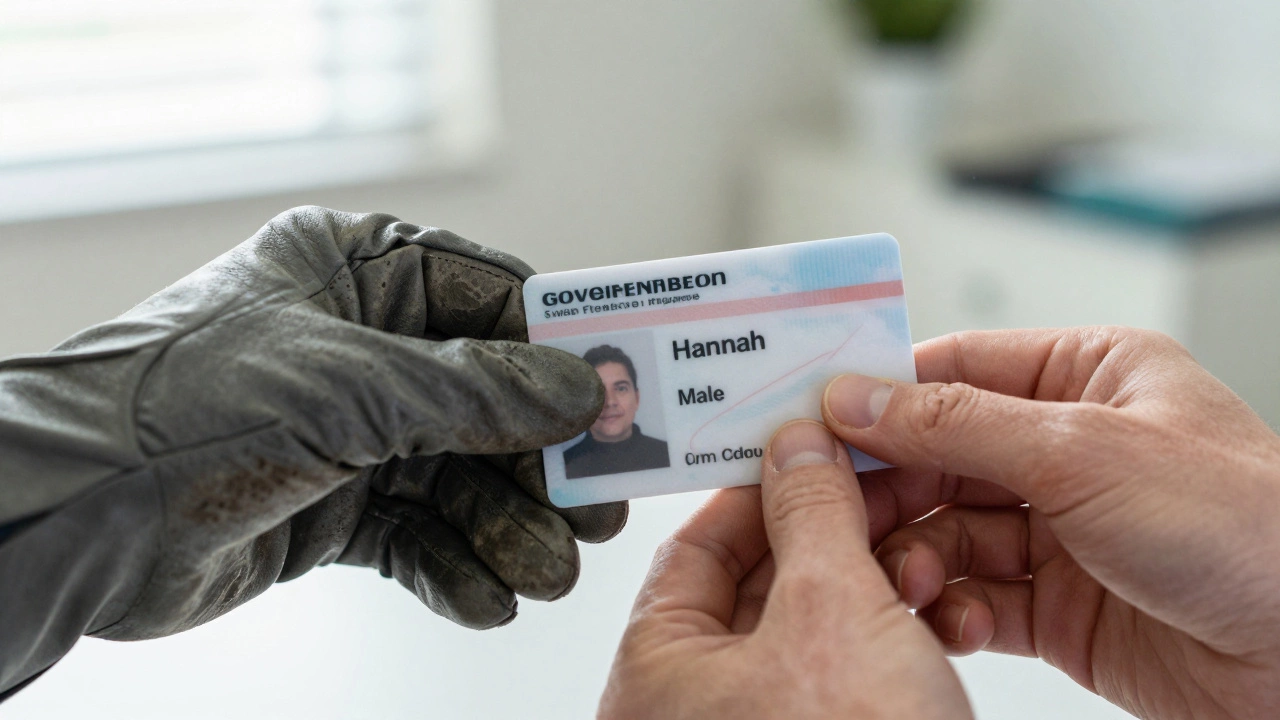
Last year, I got my new ID. First time ever, it said "Hannah" and "Male." No asterisks. No corrections. Just me. I took a picture of it and sent it to my therapist. She wrote back: "You’re not just surviving anymore. You’re living." I started using my real name with clients after that. Not because I was brave. But because I was tired of lying. Some clients didn’t know what to say. One asked, "Is that your real name?" I said, "It’s the first one that’s ever been mine." He paid me extra. Didn’t say anything else. Just left a note on the table: "Thank you for being you." I kept that note.

Why I Don’t Regret This Path
People ask me if I’d do it again. I always say yes. Not because I love the work. But because it gave me back my body. My voice. My right to exist without permission.
I’ve met other trans men in this line of work. Some are in New York. Some in Berlin. One runs a support group in Toronto. We don’t talk about clients. We talk about therapy bills. About dysphoria on bad days. About which pharmacies carry the best brands of binders. We talk about how hard it is to find housing when your ID doesn’t match your face.
There’s no handbook for this. No manual on how to be a trans man and a sex worker and still feel whole. But we’re writing it together. In quiet texts. In late-night calls. In the way we hold space for each other when the world won’t.
And yes, I’ve seen the headlines. I’ve read the stories about prostitues in dubai and the myths around dubai escort girls. They’re not my story. But they’re part of the same landscape-a world where people are forced to sell parts of themselves just to survive. I don’t romanticize that. I just know what it feels like to be reduced to a stereotype. And I refuse to let that be the end of my story.
What This Work Taught Me About Power
Power isn’t in the money. It’s in the silence after you say no. It’s in the way you learn to trust your gut. It’s in the small victories: getting a good night’s sleep, not having to explain yourself, not feeling like you’re apologizing for breathing.
I used to think masculinity meant being tough. Now I know it means being honest. Being consistent. Being willing to walk away when something doesn’t feel right.
Some days, I still wake up and feel like I’m faking it. Like I’m wearing a suit that doesn’t fit. But then I remember: I didn’t become a man by changing my body. I became a man by refusing to let anyone else decide who I was.
And if that’s not strength, I don’t know what is.
There’s a myth that people like me end up broken. That we’re victims. That we’re lost. But I’ve seen too many of us-trans men, trans women, nonbinary folks-building lives on our own terms. We’re not asking for permission. We’re not waiting to be saved. We’re just showing up, day after day, and saying: I’m here. I’m real. And I’m not going anywhere.
That’s the transformation.
It wasn’t the hormones. It wasn’t the surgery. It was the choice to stop hiding.
And if you’re reading this and you’re still hiding? I see you. You’re not alone.
There’s a whole world out there where you don’t have to be what they want you to be. You just have to be you.
And sometimes, that’s enough.
One of my clients, a retired teacher from Chicago, once asked me, "What do you want people to say about you when you’re gone?" I didn’t have an answer then. Now I do.
I want them to say I didn’t let the world shrink me.
And I want them to say I helped someone else feel less alone.
That’s all I ever wanted.
And now, I have it.